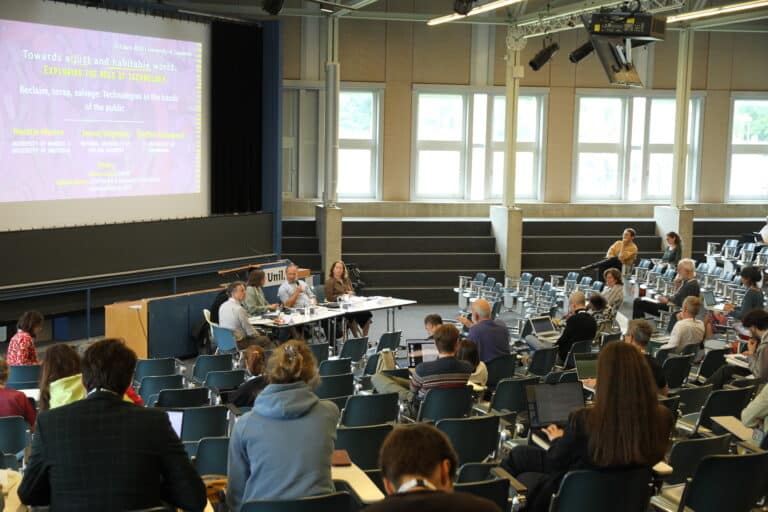
Last week, global leaders, scientists, businesses, Indigenous Peoples, other affected local communities, and many other civil society groups convened in the Amazon rainforest for the COP30 kickoff. Around the same time, our international cohort of students for the programme Ajalala gathered online to pursue the round of Introductory lectures to Sustainability science, with Youba Sokona and Wolfgang Cramer; two distinguished scientists who have actively contributed to the IPCC since the 1990s and have been engaged in many former COPs.
Wolfgang and Youba addressed the systemic challenges of sustainable development through the central issues of climate change acceleration and vulnerability, decline in habitability, science-policy dialogue, and energy transition in Africa. From challenges to action for transformation, they emphasised not only the need for scientific knowledge but also the significance of researchers’ engagement and the role of civil society.
Is there a universal framework for assessing the implementation of the Paris Agreement that would be applicable to all countries, acknowledging the diversity of contexts? What would be the most effective mobility strategy to promote accessibility of African cities? Could electric cars be a viable option for Africa?
Belém’s platform may have engaged unexpected stakeholders for a short hour and a half, given how the discussion between our students and speakers quickly tied with last week’s COP30 thematic focus – from adaptation and cities to transport and climate finance. If COP-related organised disinformation and criticism over COP’s presumed climate procrastination peaked in the lead-up to Brazil, the Ajalala cohort’s keen interest in COP’s implementation stood out, as both presentations prompted more questions than our time would allow.
Lastly, defeating climate disinformation took centre stage in this “COP of Truth”, as President Lula put it. Belief in science is the new overriding tipping point. Hence, Youba’s practical spotlight on AISESA (African Institute for Sustainable Energy and Systems Analysis) – an initiative that aims to foster evidence-based, context-specific national energy pathways in Africa, by similarly connecting with policymakers, society, businesses, and academia – was a welcome reminder that, together with reaffirming globally the value of major scientific productions such as IPCC’s publications, developing more thrustful and grounded knowledge remains critical, especially in the African context.
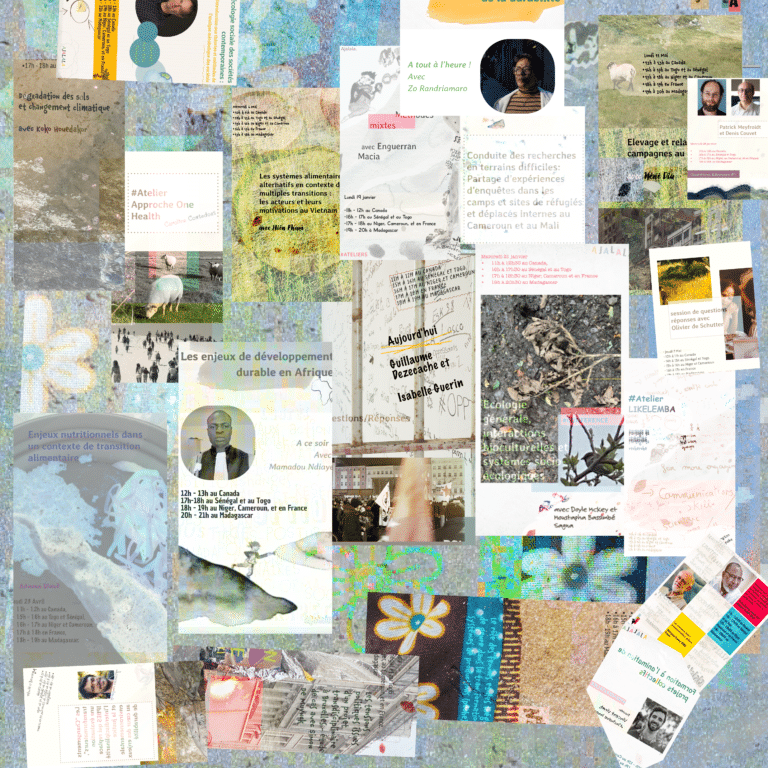
The next round of conferences focusing on systemic approaches to socio-ecological issues will feature Éric Pineault (Université du Québec à Montréal), Moustapha Bassimbé Sagna (Université Cheikh Anta Diop de Dakar), and Doyle McKey (CNRS).