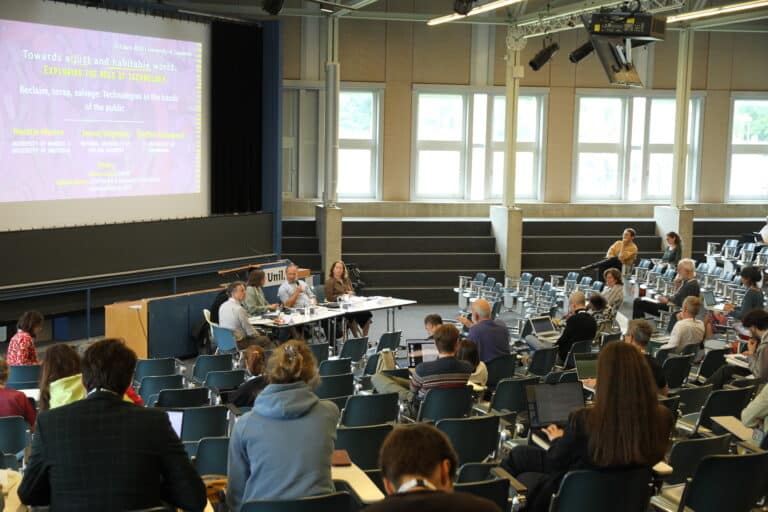
The final seminar of the programme Ajalala was an important occasion for this year’s cohort to come together and keep strengthening the connections built throughout the year. The students had the opportunity to present their work through scientific posters and participate in workshops about transdisciplinarity and imagining alternative futures.
Experiencing Togo and its coastline
Most importantly, this event dedicated time to discovering the local reality that welcomed us, learning about its social and environmental challenges. Students had the chance to learn about the work carried out at the Centre d’Excellence Régional sur les Villes Durables en Afrique of the University of Lomé (CERViDA – DOUNEDON), which warmly hosted us for the week
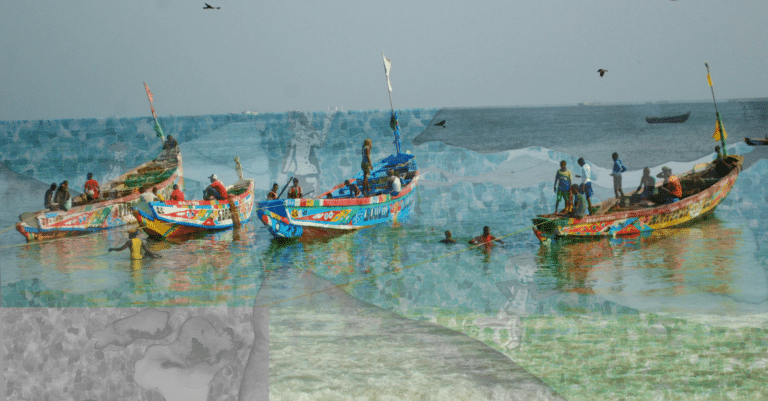
While many of the students of the CERViDA-DOUNEDON presented their research work on the Togolese region, the cohort also got a concrete understanding of the challenges facing Lomé’s coastline. Through a field trip guided by a delegation of the Ministry of the Environment of Togo, the students could better understand the key challenges facing the region – such as coastal erosion – and the communities bearing the brunt of these impacts.
Unprecedented flooding, a well as the last vestige of a vanished house, a location stranded at sea on Google Maps as the lingering trace of a lost village, a lively, sprawling Lomé, teeming with motorcycle taxis, a botanical garden in Aného, Togo’s historic capital, or the imposing silhouette of a cement factory rising near the coast, each image reveals a different facet of how Togolese landscapes has been impacted and reshaped over time. This field trip was also a moment to understand the importance of building resilience, which was beautifully exemplified by the Ajalala group collectively planting over 30 trees in the botanical gardens of Aného.
Ajalala Tontine ! Building and supporting connections
After a week of intense exchanges, discovery and building community, we are grateful for the students’ enthusiasm and motivation to make mutual learning and support one of the building blocks of the Programme Ajalala. We would also like to extend our gratitude to the CERViDA, who allowed us to come together in Lomé and share this moment of learning and conviviality.
Do not hesitate to learn more about the work of CERViDA. Their main areas of research include urban planning, sanitation, urban ecology, urban governance, mobility, housing and sustainable construction. Various themes. All guided by the same objective of producing valuable knowledge that can directly contribute to Africa’s sustainable development trajectory.
Delve deeper: https://cervida-togo.org/publications.html or https://cervida-togo.org/